Totara Field-day
Northland Tōtara Working Group and Tāne’s Tree Trust.
23rd November 2016 -
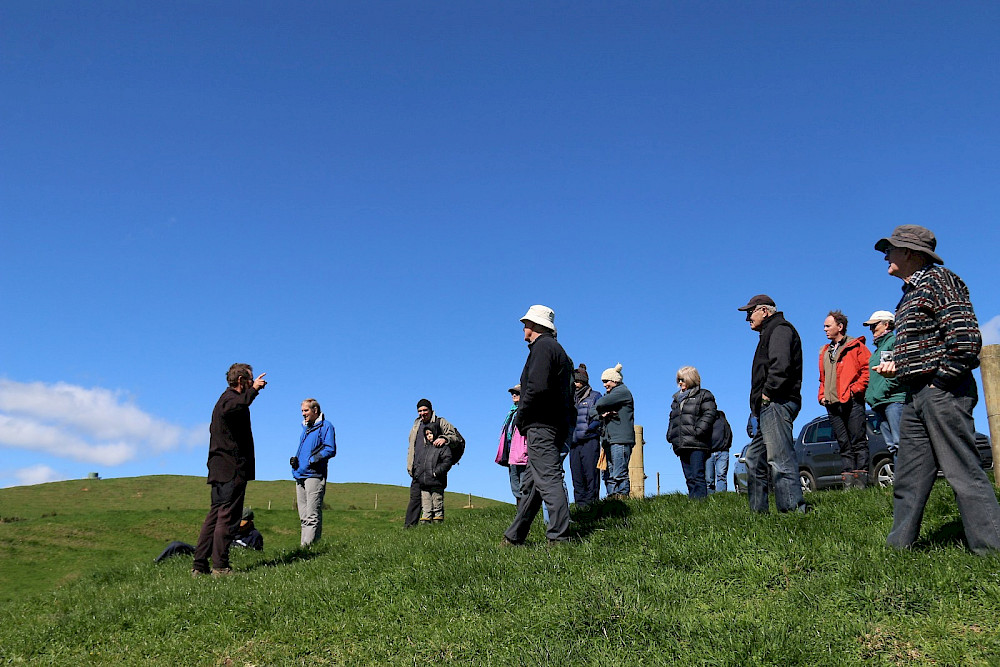
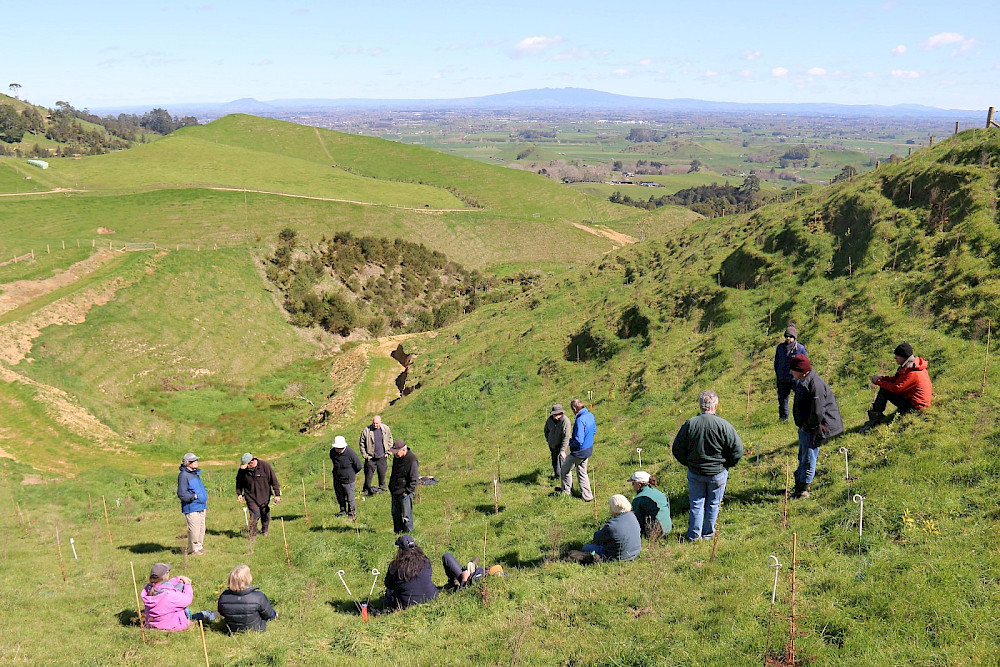
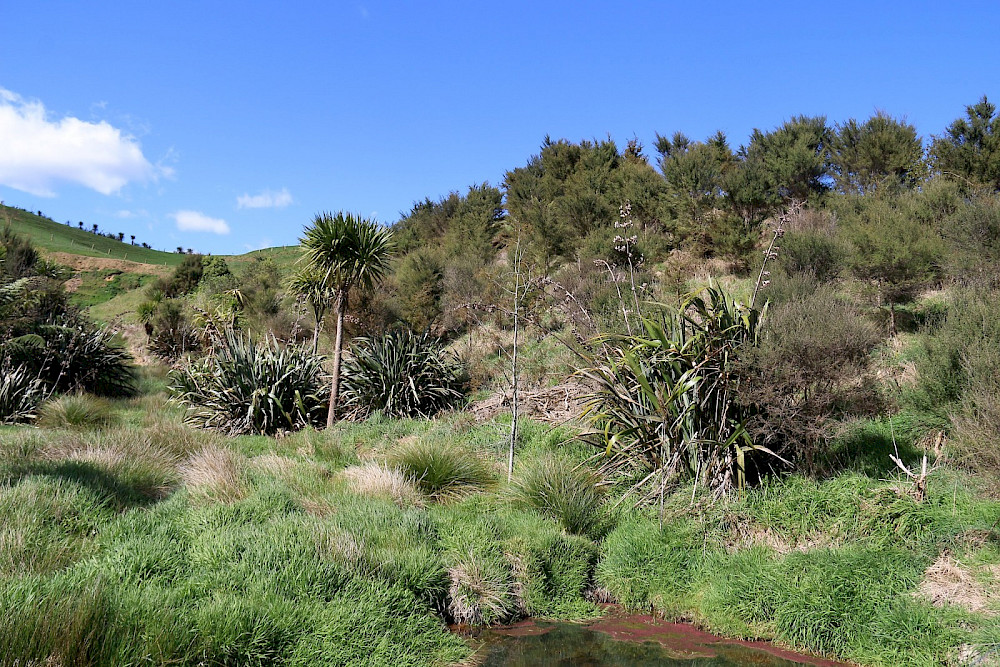
Tōtara for timber + biodiversity + riparian management.
Everyone is welcome!
Click here (PDF, 714.26 kB) for all of the details.
Posted: 14 October 2016
Northland Tōtara Working Group and Tāne’s Tree Trust.
23rd November 2016 -
Tōtara for timber + biodiversity + riparian management.
Everyone is welcome!
Click here (PDF, 714.26 kB) for all of the details.
Posted: 14 October 2016
Our Annual General Meeting is going to be held on this Saturday 10th September at 815 Maungakawa Road, RD 4, Cambridge, Waikato.
Our day will start with the AGM at 10am, followed by a field visit around the property.
Please email us [Enable JavaScript to view protected content] if you wish to attend.
Posted: 6 September 2016
The David Johnstone Pukemokemoke Bush Reserve is a 40ha patch of forest situated at Tauhei, 20 minutes north of Hamilton. It contains an excellent range of lowland forest species including kauri and a declining population of hard beech. A massive effort has removed extensive weed populations of privet, pampas, honeysuckle and gorse, as well as total control of possums, stoats and rats. We have about 40 kauri trees on the leading ridge, several of decent size and this outlier represents one of the southernmost natural stands of kauri in the country.
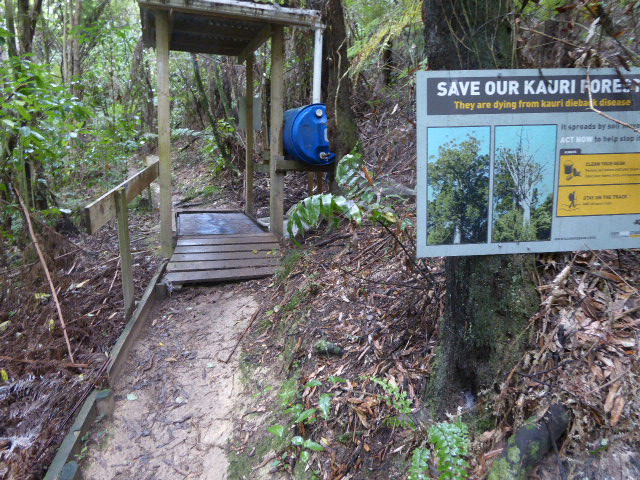
Recognizing the spread of PTA (Phytophthora taxon Agathia) and the need to control the spread of soil from footwear we erected covered walkthrough foot wash stations above and below the stand. While these are a step up from the manual boot washing stations so far used, we have acknowledged that this was not the full answer to keeping PTA out of the reserve.
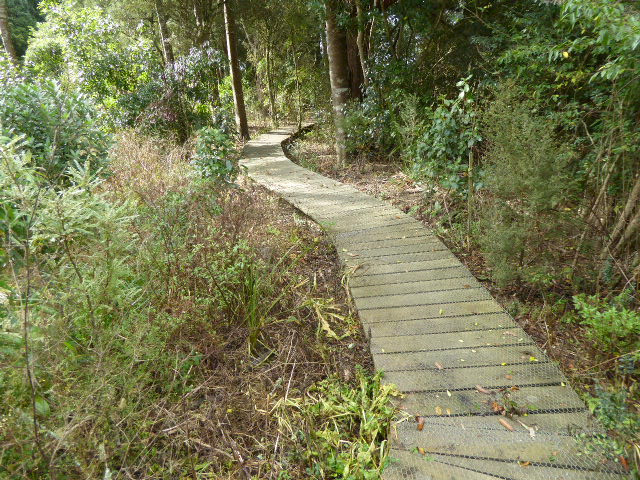
Taking advice from DOC and from those working on the spread of PTA we have resolved to construct a raised wooden walkway for 360m through the kauri area, and add further boot washing apparatus at the top and bottom of the stand of kauri. Regional Council (Environment Waikato) have already donated $12,000 to assist with this and we have applied to Waikato District Council for the balance of the $32,000 we have budgeted. The picture shows a section of walkway we have already constructed for access at another part of the reserve. We have a faithful bunch of volunteers who do most of the work in the reserve and have resolved to do all the construction with volunteer labour.
By Warwick Silvester
Posted: 25 May 2016
Tanes tree trust was invited to facilitate a workshop on Farming with Native Trees, promoted and managed by Merrin Whatley, land management officer at Auckland City. The workshop was designed to inform local famers and lifestyle folk in the Mahurangi area of the potential for planting native species on their land. There were 25 registered participants with 17 on the waiting list. It was held on Matt Wech’s farm, a fourth generation property at Mahurangi which, amongst other features, has a number of hectares planted with manuka for honey production. We were represented by David Bergin, Paul Quinlan and Warwick Silvester in which I gave the TTT raison d’être and background to why plant natives trees, David led practical discussion and Paul gave a cameo on landscape. A field visit was rained out after 30 minutes but did give rise to very good discussion. The information was very well acknowledged with lots of excellent discussion. A very interesting discussion on managing bees rounded off a very successful day. Paul’s presentation on landscape and heritage was particularly well received and highlights values that we often take for granted. The discussions were often stimulated by David’s very practical suggestions and valuable insights.
I guess one can measure success as the number of new members who carried off their thick bundle of bulletins. Nine people signed up, that is 36% of registered participants.
Merrin informs us that the feedback from participants was excellent and there seems to be an appetite for this sort of field meeting and further workshops are anticipated.
By Warwick Silvester
Posted: 27 May 2016
Over the last several decades, Jaap and Sue with friends Ham and Jan Gifford, and more recently Tim Sharp, Peter Goodwin and others have transformed 9 hectares of riparian zones along the Awahou Stream, from dense exotics to native shrubland and forest.
The Awahou is one of the major streams flowing into Lake Rotorua. Since riparian areas within the primarily farmland catchment were fenced off, the sides of the stream become infested with blackberry, willow, barberry and other exotics.
The Bay of Plenty Regional Council has supported the project for the last 15 years. It has financed the machinery for the removal of a substantial rubbish dump, as well as for the clearing of very large willows along the stream. In addition the Council provides funding for plants and herbicides.
The restoration of the Awahou is an excellent example of best-practice where conversion of blackberry up to 4 m tall in places interlaced with just about every other aggressive brush weed in the central North Island has been cleared and planted with a range of native shrub and tree species. Many native planting projects are not well maintained and as a result performance is often severely compromised.
With Jaap’s background as a nurseryman, his focus is on planting good quality nursery raised plants with well-formed root systems with minimal distortion. The riparian plantings along the Awahou also demonstrate how native timber tree species can be planted along fertile river terraces for future potential speciality stands.
Posted: 25 November 2015