
Introduction
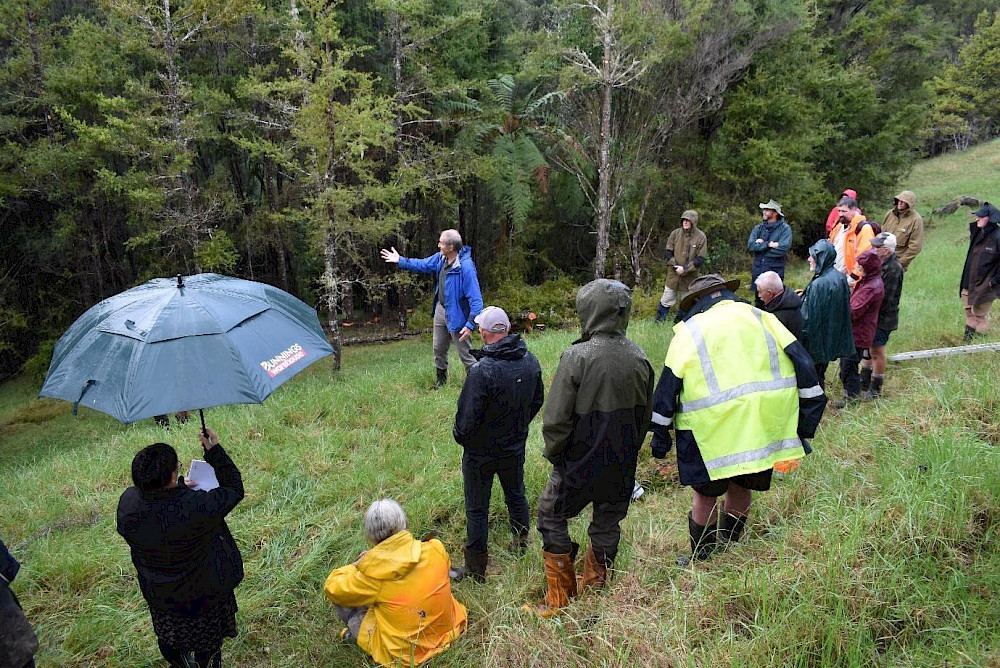 Over the past 12 months, a major focus for Tāne’s Tree Trust (TTT) has been implementing the Native Forests for Resilient Landscapes programme, supported by The Tindall Foundation (TTF). This initiative builds on the success of previous work that has accelerated progress toward better outcomes for both land and people, in collaboration with like-minded organisations and initiatives such as the NZ Institute of Forestry, Tiwaiwaka, NZ Farm Forestry Association, Pure Advantage, and Trees That Count.
Addressing the urgent need for science-based information and technical guidance, the programme focuses on working with nature, demonstrating managed regeneration as a cost-effective way to establish native forests at scale and providing practical options for the sustainable management of nature-based native forestry to meet the challenges of climate change and enhancing indigenous biodiversity.
Workstreams
There are workstreams underway for which workplans have been completed and projects within each workstream initiated over the first year of this programme.
WORKSTREAM 1: Working with Nature
Establishing native forestry at scale will only be possible by working with natural regeneration and forest succession, i.e., assisted natural regeneration with strategies such as seed islands. We must quickly learn how to apply these approaches and promote their adoption.
Background
TTT has focused in recent years on planting natives to meet environmental, cultural and economic goals, producing best-practice guidelines, tools, factsheets and videos freely available on our website. However, blanket planting is prohibitively expensive, so complementary strategies are needed. Working with nature—supplementary planting, pest and predator control, and use of existing vegetation cover including exotics—can accelerate regeneration and achieve large-scale native forest establishment.
Up to 1.5 million ha of erosion-prone marginal hill country in New Zealand requires conversion to permanent forest cover, mostly native. Incentivising landowners to change land use is critical to addressing biodiversity loss and climate change, integrating natives into productive landscapes, protecting erosion-prone land, improving water quality, and safeguarding downstream communities.
Key projects
This workstream will investigate practical, cost-effective ways to encourage regeneration alongside planting:
- Role of Natural Regeneration – Define successful regeneration, how to encourage it, and the role of planting in accelerating forest establishment.
- Review knowledge on reversion and practical steps for landowners.
- Assess techniques such as enrichment planting, seed islands, pest and weed control, and use of shrubland or exotic cover.
- Analyse datasets (Cyclone Bola/Northland plots, Tōtara Working Group, seed islands, exotic-to-native transition trials).
- Draft best-practice guidelines for large-scale conversion of marginal land to native forest.
- Quantifying Regeneration – Develop a simple method to assess and measure regeneration.
- Work with others including remote sensing expertise and MPI/TUR on a user-friendly reversion assessment system.
- Explore expanding TTT’s planted native monitoring tool to include regeneration, evaluating both ground-based and remote sensing methods.
- Carbon and the ETS – Investigate carbon’s role in incentivising reversion.
- Work with MPI/TUR on factsheets, calculators, videos, and case studies showing potential carbon returns from planting and reversion.
- Explore promoting ETS options for large-scale reversion.
- Demonstration Sites – Create a national network of best-practice farms and forests showing land-use change to natives.
- Identify and showcase examples of retiring marginal land or integrating natives into production.
- Use sites for field days and workshops with forestry and farming groups.
- Highlight environmental and economic benefits from farm to landscape scale.
Progress to date
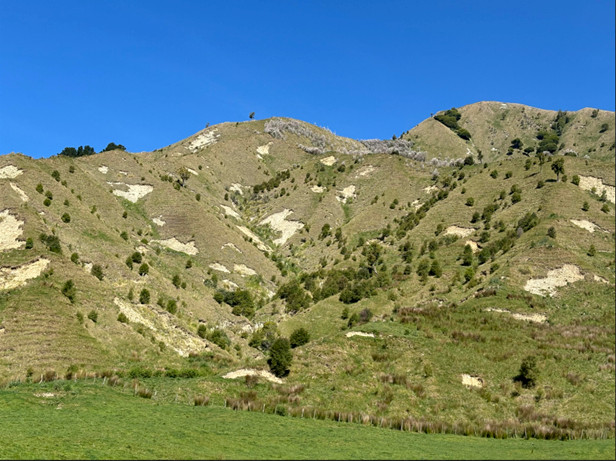 This project marks a major shift in large-scale native forest restoration, particularly on eroding hill country. Rather than relying solely on costly blanket planting, we are prioritising scalable, nature-based solutions with targeted planting to accelerate natural reversion. Key barriers remain pest animals and introduced bird predators. Trials are underway using supplementary planting of key native shrub and tree species to boost local seed sources of high-forest species as a cost-effective way to drive regeneration across the wider landscape.
Planning has begun to investigate remote sensing such as aerial photogrammetry and drones and how these methods can integrate with ground-based methods to monitor regeneration. The goal is to give landowners user-friendly, robust tools for assessing the success of retiring marginal land at scale to encourage natural forest recovery.
There is growing acceptance that exotic vegetation common in early succession can sometimes accelerate native forest recovery. The effectiveness of enrichment planting and promoting reversion through exotic shrubland depends on the species present and needs further evaluation as a practical, cost-effective restoration method. This nature-led approach will inform the next generation of TTT’s tools, calculators, and guidelines to scale up restoration efforts.
WORKSTREAM 2: Making the case for native forestry – timber values, CCF, NTWG
Workstream 2 of Tāne’s Tree Trust’s programme Native Forests for Resilient Landscapes continues work on foci that were part of the preceding programme, Normalising Native Forestry. This includes the promotion of nature-based forestry, such as the Northland Tōtara Working Group (NTWG), and Continuous Cover Forestry (CCF), but also work on novel ecosystems and transitioning of exotic to native forests.
Workstream Objectives
Managing native forests on private land and Continuous Cover Forestry (CCF) need to become viable land use options in order to occur at any significant scale within the rural production landscape. To help bring this outcome about this workstream aims to:
- Advocate and support Sustainable Indigenous Forest Management (SFM) and the development of native timber industries and use, especially the opportunities to manage tōtara in Northland and other regions.
- Advocate and support Close-to-Nature CCF practice in Aotearoa NZ – including transitions from plantation structures and mixed species (exotic/native) forests.
- Influence the development of conducive policies and regulation frameworks and reduce impediments to native forestry and CCF in New Zealand.
- Expand the Tāne’s Tree Trust database to include networks of research trial and demonstration sites of native forestry, CCF, and transitional forestry.
- Continue to support and/or coordinate collaborative projects with sector partners and stakeholders.
Outputs
 The first year’s outputs have included:
- A Northland Tōtara Working Group (NTWG) newsletter
- Two articles published in the Tree Grower Journal on legal disincentives affecting native forestry
- One article published in the NZIF Journal of Forestry on Continuous Cover Forestry
- Provision of material to the Parliamentary Commissioner for the Environment (PCE) research team for the report on resetting forestry in NZ
- A collaborative research project proposal with Scion on native timber properties is being scoped
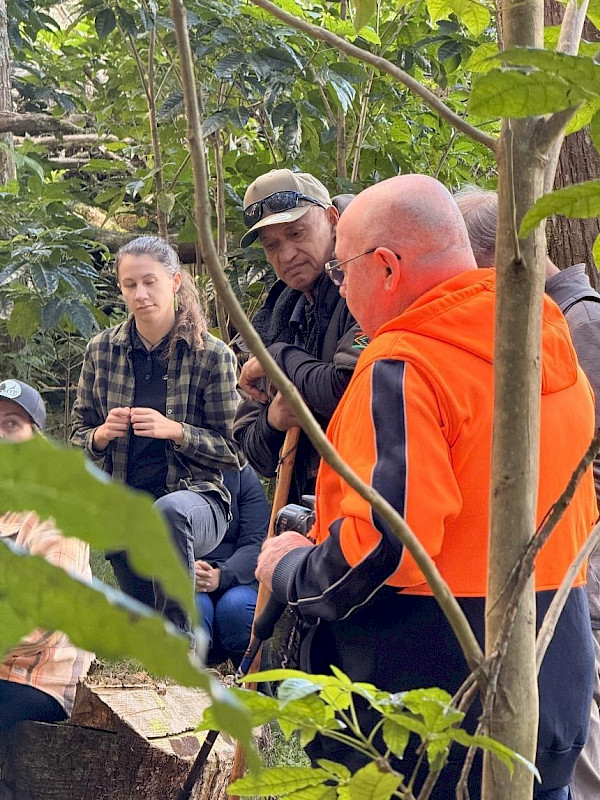
- Two tōtara field days (jointly hosted by the NTWG and Te Taitokerau Māori Forestry Inc. funded by MPI, and generously supported by Scion, Oromahoe Trust, Northland Regional Council, Tapuaetahi Inc. and Tāne’s Tree Trust)
- Workshops on Native Forestry, Transitional Forestry and CCF were held in Nelson, funded by Te Uru Rākau and Nelson City Council.
- Support for a Nelder trial design for Himalayan alders and tōtara (at Eastwood Hill)
- In collaboration with Whenua Oho, a Sustainable Indigenous Forest Management (SFM) Plan for a property in Northland has commenced
- Support for the Tōtara Industry Initiative – trying to facilitate a functional supply chain with NZ-based processors and manufacturers
For more information, contact the office: [Enable JavaScript to view protected content]
WORKSTREAM 3: Making the case for native forestry – non-timber values, education and promotion
This workstream flows from the previously funded programme NNF (Normalising Native Forestry), particularly the momentum created by the publication of the review of non-timber values, which raised the profile of native forests and resulted in greater recognition of their wider values - www.tanestrees.org.nz/site/assets/files/1099/non_timber_values_in_native_forests_-_web.pdf
This workstream overlaps with and supports other NFRL workstreams, particularly regarding technology transfer and technical communications. The overall goal is to have management of native forest on private land recognised as a viable land use option – for the myriad of benefits it provides. The main focuses are providing resources and education on the wider values of native forests, and advocating for incentives for people establishing or restoring native forest on private land.
This workstream has three components:
- Education and training on native afforestation and the wider values of native forests, working with government organisations, other NGOs, industry groups, and Māori organisations.
- Providing advice and representing native forest interests to the green financing industry, particularly nature-based investment in voluntary biodiversity and carbon markets.
- Engagement with policymakers, and advocating for incentives for landholders and a supportive regulatory environment for native forestation.
Background
The business case for native afforestation relies on decreasing the costs for native forest establishment and also compensating landowners for the environmental and sociocultural benefits that accrue to the wider community, but do not currently have a market value. Currently there is a ‘sea change’ happening nationally and internationally, driven by market forces and increased accountability over international climate change commitments, biodiversity, water quality, and wellbeing. This is helping drive green financing and voluntary biodiversity and carbon credit systems, and investment in nature-based solutions.
Green financing refers to financial investments that support sustainable development and environmentally friendly projects. It encompasses a range of financial products and services, including green loans, green bonds, biodiversity credit systems, etc., which are designed to channel funds towards initiatives that reduce carbon emissions, and improve environmental outcomes, including biodiversity, and climate change adaptation and resilience.
Progress to date and next steps:
- Input into the Pāmu Farms SFFF Ecosystem Services project - This workstream links to the SFFF Ecosystem Services project. Information on this project is provided separately below.
- NZ Taxonomy Ag/Forestry Technical Advisory Group:
- TTT and two trustees were approached to provide a representative for a technical advisory group (TAG) for building an economic investment framework (taxonomy) for NZ - on climate mitigation, adaptation and resilience - https://sustainablefinance.nz/nz-taxonomy-public-consultation/
- Jacqui Aimers is currently representing native forest interests in the TAG, coordinating with the wider TTT team.
- This taxonomy is being developed on behalf of the NZ Government in response to increased accountability in world trade over international climate change commitments and biodiversity agreements, and the wellbeing of local communities and indigenous people.
- Work on the NZ taxonomy is led by the Centre for Sustainable Finance, coordinating with international experts who have helped create taxonomies for other international entities including the European Union, the UK, Singapore, China, and Australia.
- TTT has also been asked to provide technical advice in support of several voluntary biodiversity and carbon credit programmes.
- Geoff Simmons, Chief Economist for the PCE (Parliamentary Commissioner for the Environment) requested info on TTT work, particularly the Ecosystem Services project.
- Alt-F Reset – Examining the drivers of forestry in NZ - Several TTT trustees helped with the PCE review on alternative forestry systems - https://pce.parliament.nz/publications/alt-f-reset-examining-the-drivers-of-forestry-in-new-zealand/
- Workshops and field trips on native afforestation continue for farmers, foresters, and iwi, including a visit by University of Canterbury School of Forestry students to Cassie’s Farm with landowner and trustee Ian Brennan.
- TTT participated in TUR Native Afforestation Hui and provided further information on request - in support of Māori interests in native afforestation, including transitioning from clear-fell plantation forestry to native forest cover on highly erodible steeplands.
- Two trustees presented at a workshop for Dunedin teachers and helped with creation of resources for the Dunedin Town Belt Kaitiaki - on carbon sequestration measurements, in preparation for field trips with students.
- A presentation was given at the NZ Ecological Society conference in November 2024 - Carbon sequestration in Aotearoa NZ’s planted native forests.
- Resources and advice were provided to a Scion intern studying ecosystem services associated with native forests.
- Two Nuffield scholars were taken on field trips - an Irish forestry leader and a young British forester. Both are working to bring back more native forest into landscapes in their homelands and they wanted insight into what TTT is doing in NZ.
- TTT coordinated with NZ Institute of Forestry (NZIF) in:
- Lining up papers on native forestry for publication in the NZ Journal of Forestry.
- Providing input into the excellent NZIF Conference “Emerging Stronger” (post Cyclones) in Napier in June 2025. TTT had an exhibition booth, provided native forestry resources for the conference bags, provided CPD (continuing professional development) on native afforestation, and a presentation on the transitional forestry project, plus contributed to a conference session panel discussion.
- TTT wrote submissions for:
- Resetting the ETS annual charge. This included extra information on incentives and barriers for native afforestation, as requested by MPI.
- The Aotearoa NZ Sustainable Finance Taxonomy, first public consultation - on climate mitigation. (A further public consultation on the NZ Taxonomy will be opened in September on climate adaptation and resilience). See above for info on the NZ Taxonomy work.
- Looked at potential collaboration, providing help with resources and advice for Trees for Survival, a charitable trust supporting schools to grow and plant native trees to restore our environment - https://www.tfsnz.org.nz/
 Overall, TTT has had an increase in requests for information and strategic advice on native forestation from government organisations, NGOs, iwi organisations, landowners and private investors. We need to continue to provide science-based information and extend our reach and impact by making our resources and data more accessible to policymakers and stakeholders - particularly in the face of increasing impacts of climate change and loss of biodiversity - advocating for the many benefits of native forest, much of which accrue downstream and to the wider community.
For more information contact: Mel Ruffell - [Enable JavaScript to view protected content]
WORKSTREAM 4: Improving our records and database development
TTT holds the largest database of planted and managed natives, which now needs upgrading to an interactive, open-access national database covering reversion, transitional forestry, supplementary planting and continuous cover forestry.
Background
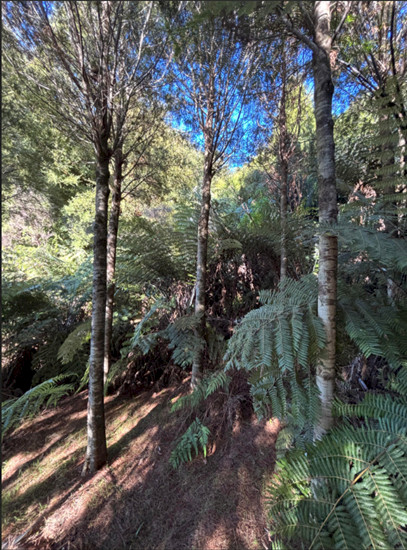 TTT’s database is the most comprehensive record of native tree and forest growth, but naturally regenerated stands are largely absent. An upgrade is needed to meet multiple objectives and host data from other organisations. Good data underpins most of our work, and demand for access is increasing.
The new relational database will replace the Excel system, incorporating over 100 years of plantation data and enabling calculation of key plot metrics such as stocking, mean top height, basal area, carbon per hectare, and species diversity. It will also store data on regenerating shrubland, sustainably managed regenerating forest, exotic-to-native transitions, urban native forest, biodiversity monitoring, remeasurements in planted stands, and continuous cover forestry plots.
Projects in this Workstream
- TTT Database System
- Complete setup of the new primary database for planted and naturally regenerating stands including:
- Existing plantation database (>100 PSPs and growth plots)
- New plantations and PSPs
- Transition forestry plots
- Regeneration plots (Tairāwhiti Cyclone Bola, Northland)
- Northland Tōtara Working Group plots
- Seed island demonstration and satellite sites
- Complete setup of the new primary database for planted and naturally regenerating stands including:
- Develop user-friendly field and desktop data entry.
- Implement automated retrieval, analysis, and reporting of PSP, growth, and trial plot data.
- Image Library
- Central repository of all TTT digital images and videos on sustainable native forest management.
- Include high-resolution/originals used in TTT resources, with source and copyright details.
- Provide backend storage, and user-friendly retrieval, editing, captioning, and source management.
- Reference Database
- Online database modelled on the Coastal Restoration Trust system.
- Include published/unpublished references, “grey literature,” and all TTT resources.
- Searchable by author, subject, publication type, with PDF copies or links where possible.
- Respect copyright and IP protocols.
- Promotion
- Promote new database systems to stakeholders and set access protocols.
- Enable other entities to add their data.
- Run workshops/webinars on using the databases alongside TTT’s calculators and monitoring tools for planted and managed regeneration.
Progress to date
Subject to securing ongoing co-funding, Tāne’s Tree Trust (TTT) is developing a new MySQL- and Python-based database, building on the structure of the current Microsoft Access system. The upgraded platform will store TTT’s own data as well as datasets from other organisations involved in native forestry, several of which have already approached TTT to host their information.
The database will cover a wide range of topics, including sustainably managed regenerating native forest, early planting assessments, biodiversity and regeneration monitoring, enrichment planting (e.g., seed islands), exotic-to-native transitions, urban native forest, remeasurements and new measurements in planted stands, and continuous cover forestry plots.
A user-friendly, web-based interface is also planned, with geospatial capability and tools to calculate key plot-level metrics such as stocking, top height, basal area, carbon, and species diversity.
WORKSTREAM 5: Survey of native plantings
Regular remeasurement of planted native stands and measurement of new stands is essential for accurate long-term growth forecasts (50–100 years) and for maintaining robust growth and carbon models. Other organisations value and seek access to this data.
Background
Plantation data underpins TTT’s database, growth models, and online calculators. Updating this requires both periodic remeasurement of existing permanent sample plots and adding newly located planted stands. Long-term records gain value with each remeasurement, improving forecasts and expanding coverage by species, site type, and management regime.
Surveying native plantings will be an ongoing annual activity, with the scale dependent on resources. Alongside Workstream 4’s database upgrade, priority is developing a user-friendly system to incorporate regular survey data and broaden the database to capture more species, site conditions, and management approaches nationwide.
Projects for this workstream
- Survey programme – establish an ongoing system for surveying native plantations, with annual survey numbers based on available resources.
- Draft guidelines and backup systems for long-term tracking, with data entered into the TTT database.
- Remeasure established PSPs and growth plots in planted native hardwood species.
- Locate undocumented plantations (typically 10+ years old) and set up new PSPs.
- Increase plot coverage across species, site types, management histories, and treatments to develop species-specific and regional growth/carbon models.
- Expand database coverage to rural and urban sites, including shelterbelts, amenity plantings, and restoration projects.
- Digitise historical survey records and site information for future-proof access and efficient processing.
- Collaboration and promotion – use multiple methods to locate new stands for assessment and inclusion in the database. Work with forestry and farming networks to promote and conduct the survey.
Progress to date
The survey of planted native stands is well underway. Since the last main survey in 2010–2012, 11 Permanent Sample Plots (PSPs) and two growth plots have been remeasured in the Bay of Plenty, Waikato, and Hawke’s Bay regions, with data entered into the TTT database.
New plots have also been established but not yet added to the database, including 21 PSPs and 11 growth plots. These cover further stands in the Waikato, Bay of Plenty, northern and southern Hawke’s Bay, as well as sites in south Auckland and the Wairarapa.